3 Essential Time Management Tools

Time management can be easy or difficult to do.  One of the thins that makes our time easier to manage outside of managing our priorities is the use of time management tools.  Sometimes we get lost in certain tasks and don’t really realize how much time we are spending in the things that we do.  This article discusses some of the time management tools that can help us to reach our goals.

One thing that the New Year brings on is the desire to get organized, or reorganized, as the case may be. Managing your business depends a great deal on time management. If you are not managing your time efficiently you will tend to have lack of focus, scattered energy, projects never get completed, lack of follow-through, and not honoring commitments. Highly successful entrepreneurs have tools to organize their time, their activities, and their thoughts.

Here’s my short list of valuable tools to help you get organized and have more efficient time management.

1) Managing your appointments: TimeTrade.com & Google Calendar
The first thing you need to organize your time around is appointments. Before I started using TimeTrade, I was going back and forth with emails 3 to 6 times trying to find a time that worked for both parties. It was a colossal waste of time. For a mere $56 a year you can save an enormous amount of time and frustration and you will also get a handy reminder for all your appointments. It works in conjunction with several online calendars, including Google Calendar.

Google Calendar also gives you a reminder when an appointment is coming up. You can set how long before the appointment you want to be reminded and choose between email or a pop-up (which won’t go away until you click on it).

2) Managing your activities: PlannerPads.com
When I started my business, there weren’t any type of planners that suited me, so I made my own. It was organized via monthly, weekly, and daily. But I had to print a new one out every year and that got rather tedious. The closest planner I have found that is a viable substitute was Planner Pad. This planner is organized so you can sort your to do list by categories, plan out your activities for the week, and set your appointment dates—all in one view.

This is a great way to not only plan out your activities in a coherent manner, but also organize your thoughts, ideas, and reminders. It’s harder for things to slip through the cracks because you are planning more broadly and you can see the big picture at a glance.

3) Managing your business mindset: ESC 30-Day Plan
One of the best tools I discovered in my coach’s training and that I teach to my clients is called a 30-Day-Plan. The idea behind it is that you plan out what you need to accomplish in the next 30 days and then get clear on the energy around those activities necessary to complete the plan.

For example, you would set your 30-day goal such as…

  • How many clients would you need for one month?
  • How many products would you need to sell for one month?
  • How many sales conversations would you need to have?
  • How much networking would you need to do?

Once you are clear about these kinds of specifics, you chunk it down into weekly and daily actions. Then you take a look at your own energy around those goals and what else may get in the way of achieving them, including any beliefs you may have about not getting them. Clients find that planning out 30 days at a time is less overwhelming and an easy way to get more organized. And using the 30-Day-Plan’s inner and outer approach is a more efficient way of management.

These 3 tools will absolutely help you become more organized and will use your time more efficiently. Better time management and more organization equals more productivity. And, more productivity equals more profit.

Jeannette Koczela is a spiritual life business coach who helps Solopreneurs manage their business energy. If you would like to start the New Year with tools that can easily help you with better organization and time management, please contact her for a strategy session at http://empoweredspiritcoaching.com/strategy-session.html

Enhanced by Zemanta
Posted in Time Management | Tagged , , | Leave a comment

Productivity And Time Management Can Increase Your Internet Marketing Bottom Line

Time management for Internet businesses is very important because a business owner

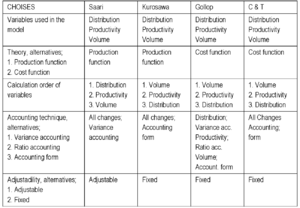
Summary of productivity models (Saari 2006b)
Summary of productivity models (Saari 2006b) (Photo credit: Wikipedia)

can get very overwhelmed with the tasks of managing their online presence.  It is necessary to stay focused on the activities that bring you money and outsource the rest.  This article is about some of the things that can cause you a reduction in your efficiency and productivity.

Is productivity something you give much thought to in your business? What about time management? These are two areas that can make or break your business, yet many new online entrepreneurs do not give them a thought until it’s too late and the business is struggling. You need to think about the activities and tasks that are necessary and relevant to moving your business forward, the amount of time you spend learning versus actually taking action, and the more long-range plans that can take your business to the next level as quickly as possible.

During my first year online I was not very productive. I wasted lots of time attempting to find the information I would need in order to build a business. Once I had isolated the specific activities I needed to engage in each day I became more productive than ever. Within a short period of time I became much faster at what I was doing and my skills also improved. I could accomplish more in a day than I used to do in a week or more. This led me to start sharing my techniques and strategies with others. Only engage in activities that will move your business forward and you will stay on track.

My first year was also consumed with learning new things. I felt like I was working eight to ten hours each day, but actually I was reading, listening to audios, and attending live teleseminars and webinars for most of that time. Once I cut that down to learning only two hours each day my productivity really increased dramatically. This business is like any other; once you have learned enough to be able to do it yourself you must jump in and start taking action.

My plans when I came online were to be able to replace my income from my previous offline jobs. I just didn’t give much thought to what would happen after that because I constantly worried about earning enough money to pay my bills each month. Once that became mush easier I was able to think ahead. I encourage you to do this from the very beginning so that you have more of a direction in your life and business. I now plan each quarter so that my business moves along at a steady clip.

You can see that productivity and time management are areas where you can improve if you just give this some thought and take action on a regular basis.

Remember that the reason to start an Internet business is to give you the time and money to live the life you choose. Download a free teleseminar on building your online business and a Special Report on 21 tips to make huge profits from a tiny list by visiting Build Your List to learn how to make huge profits with an online business through relationship marketing.

Enhanced by Zemanta
Posted in Time Management | Tagged , , , | Leave a comment

Efficient Project Workforce Management & Communication

What’s the point in all this documentation? Wouldn’t it be easier to achieve goals and ???objectives without all our time being sapped keeping capacity reports up to date? Unfortunately documentation is entirely essential, since tracking the progress of a project without this data is impossible. Imagine if a manager left; how would a replacement manager be able to pick up the project unless its status was accurately recorded? Mobile workforce management services mean that this data is always up to date, that staff can update their timesheet, capacity report or change log on the go, with all relevant parties updated immediately.

Efficient workforce management is all about co-ordinating the logistics of a project or business through a single channel or application. This can include planned and scheduled activities, project milestones, goals, objectives, resource allocation, revenue, capacity and costs. Mobile workforce management means more accurate, up-to-date records and improved communications. Historically businesses have relied heavily on reams and reams of paperwork and unwieldy spread sheets, but this is an unscalable system that could lead to a business becoming simply swamped in paperwork when business picks up.

Mobile workforce management applications mean that data is instantly updated and available to all. It means that top level monitoring is much easier to do, and the data provided is always up-to-date.

Staff might not enjoy filling out time sheets, but they are an essential way of managers tracking and reporting on capacity, completed tasks, milestones and the like. Time tracking is also an important way of staff accounting for their time at work, but entering data manually can be tedious, especially when it needs to be duplicated for other managers, departments or customers. Managing this data digitally means the most recently updated version can be viewed by all. Mobile workforce management means that everyone is up to date regardless of whether they are working from home, another office, out on secondment or even on a train or plane. Data records can be viewed, edited and copied instantly. It means progress and capacity reports are more accurate than ever, and the data itself is versatile and easy to obtain, edit, analyse and manage.

Mobile workforce management isn’t just about keeping track of resources and monitoring planned activities, it can also improve workforce communications. Mobile workforce management services can help to schedule and manage workload, report results instantly, perform safety check calls to remote workers and can help them to report incidents instantly.

If there’s no better reason to switch to mobile workforce management services it’s to save paper. Once again it’s a question of scalability. If you currently have two filing cabinets for existing customers, how will they cope with twice the number of customers? Workforce management procedures need to scalable and able to cope with these changes.

Alan Cairns writes on a number of subjects including mobile workforce management and mobile facilities management for GoMobilize.

Enhanced by Zemanta
Posted in Business Time Management, Task Management | Tagged , , , , | Leave a comment

Task Management Software to Boost Your Time Management

Task management is the key to time management.  If you can prioritize your tasks and

Getting things done
task management system

understand what you need to do to get closer to your goals (will this task take me closer to my goals or not?) then you have the road map to success.  Then the question becomes whether or not you choose to follow it.  Choosing the proper tools to assist you with managing your tasks can be the key to you following your tasks.  Read on for more on what task management software is available for you or not.

Handling your tasks effectively is the first step for time management. There are plenty of choices for task management software on the Internet.

Of course, at the most basic level, all you need to manage your task is a pen and paper to put down your tasks. But task manager software makes the job faster and easier.

Following 4 software can better your time management by offering more functions than paper-based system.

Mylife organized

Mylife organized is based on getting things done (GTD) system. The software allows you to make a list of next actions and categorize them on the basis of GTD criteria like context, importance and so on. It follow the principle of GTD to the letter but somehow doesn’t feel easy to use. In my opinion, Vitalist (below) looks more successful in embodying the GTD system.

However, If you seriously follow GTD, take a look at the software because it seems to be rated favorably by many users.

Abstractspoon ToDoList

Mylife organized costs 45 dollars. ToDoList is more price competitive. It’s FREE. But don’t be deceived by its price, the software is way better than ordinary commercial software.

ToDoList has several good features that cannot easily found in commercial programs. The interface is intuitive. It supports hierarchical data. It can have numbered items and sub-items. It allows open file format such as xml and txt.

You can make as many lists as you want with ToDoList. You can add tasks and sub-tasks in the list. Each task has a pane in which you can write memo in rtf or txt. This is very useful because you can include various information for each task like memo, websites, and contacts.

Rememberthemilk

Web-based applications have become an established trend. Many websites exist that are dedicated to task management. Rememberthemilk is one the big players in the area of web-based task management.

It offers functions that are not available with desktop software. For example, you have notification through email and SMS. You can also collaborate with colleagues on the same list.

Checkvist

Checkvist, although a new web-based task manager, looks very promising. It offers very easy and intuitive interface.

It reminds of Bonsai, palm outliner, with its versatile uses. Just like the Palm program, Checkvist can be used as an outliner and task list thanks to the hierarchical format.

You add task with Enter key and sub-tasks with Shift-Enter. You cross a task as one with space bar. Simple enough.

Checkvist is a beta program but stable enough to handle many data. If functions such as due dates, data synchronization with desktop PC are added, it may become one of the best online task managers.

Sunny Ley enjoys writing articles about various topics like time management, personal productivity, and home improvement. You can also check his recent website that covers a black shoe cabinet [http://www.shoecabinetonline.com/black-shoe-cabinet] and other kinds of shoe cabinet [http://www.shoecabinetonline.com/].

Enhanced by Zemanta
Posted in Task Management | Tagged , , , , , | 1 Comment

Warning: Use These Time Management Tools At Your Own Risk

This is an interesting post about how the tools we use to help make our lives much easier

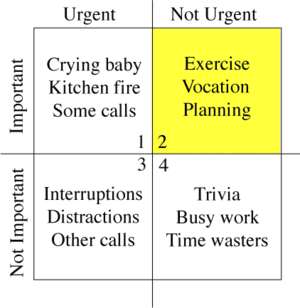
Time management matrix as described in Merrill...
time management matrix

can sometimes add to the frustration and work load in our lives if we don’t use the tools correctly.  Time management is no exception to this rule.  There are many powerful time management tools out there than can really help effectively manage our time, but they can also drive us down the rabbit hole as well if we are not careful.  Read on for more about how time management tools can wast our  time if not used effectively.

Are you managing your time efficiently? Or do you often find out that the time lost in working on your time management is more than the time saved from it? This is by far the biggest risk, along with losing money on bad tools or bad time management training.

Remember:

The point of time management is to improve the way you use your time, free up your brain from unimportant tasks, and free you up from stress. If instead of this your efforts to manage time end up in less time for you and more stress, you are obviously on the wrong way.

Tools and software can help you a lot to control your time better. Instead of having to remember activities and techniques, time management tools help you automate them. But… sometimes there is a risk. Let’s explore three major types of tools and the risks associated with them:

Low Risk: Calendars
Calendars help you organize your events, meetings, dates, important milestones and other duties. They help you not to miss your visit at the dentist and can remind your friends to come at the party tomorrow. Many calendars are free and have nice features like email reminders, sending iCal invites and so on. Calendars are very useful time management tools and you should use them. But use them properly, because otherwise they can get you in trouble too.

The main risk with calendars is to rely too much on yours. If you expect your calendar to know your appointments better than you (which is it’s purpose anyway), what happens when it doesn’t work well? What happens for example if you rely on receiving email reminder about an appointment but exactly this time the email arrives in your spam box? Such events are rare and that’s what makes them so unexpected.

You should never rely 100% on technologies. If an event is important for you, insert it in 2 or 3 calendars, put it in your phone alarm, use the good old method with paper and fridge magnet.

Medium Risk: To do lists
To do lists are neat little apps that let you create projects, assign tasks to them, reorder them, and mark them done when done. While bloody simple, these apps are very useful for time management. They help you not forget the tasks you have. They help you write your ideas as tasks in very simple way. They help you watch how you accomplish a project. Very nice!

What’s so risky about them? Just think a little. What happens with the tasks that you forget to write in the list? I’ll tell you. They never get done.
Then what happens with the not-so-easy tasks? I’ll tell you. They never get done, because you always move them after the others and if by any chance they remain the last in the list, you come up with new ideas and new tasks.

And finally, when your to-do list becomes too large, it causes the decision block. How to order the tasks, which ones to do first? When you have a long task list you can easily feel depressed and lose your motivation.

But don’t get me wrong, to do lists are great tools when used right…

High Risk: Time management charts
Time management charts are supposed to help you visualize how you spend your time, figure out the time wasters, and figure out which activities you do in your most productive time. They can be extremely powerful in giving long term results by helping you organize your daily routines and productive time better.

They can also lead to extreme time waste if not used correctly. Imagine what happens if you underestimate the importance of proper tracking and enter values in the chart “as you feel them”. Generally you will decrease the time spend to time wasters (think checking your Facebook account), because you don’t feel them as wasters. At the end the time management chart will show totally misleading information.

Another even more common risk is just to spend too much time maintaining your time management chart and then get no useful results. You don’t need another addiction – if you can get useful results from using time management charts in a couple of weeks, drop using them for good.

Don’t forget that time management tools are created to help you and they will, if you use them well. And if you combine them with the best time management activities you will be the master of your time!

Enhanced by Zemanta
Posted in Time Management Tools | Tagged , , | Leave a comment

The Key To Time Management – Putting First Things First

Time management can be very tricky if you look at it as trying to manage your time.  It

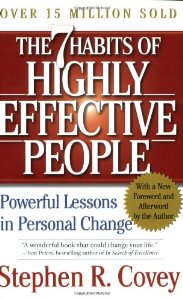
Cover of "The 7 Habits of Highly Effectiv...
Cover of The 7 Habits of Highly Effective People

is much more manageable when you look at it from the point of view of managing your tasks, and prioritizing them.  Following the philosophy of the 7 habits of highly successful people, you will get a good foundation of how you can manage and prioritize your tasks.  Read on for more!

Our time is without question our most precious resource that we have available to us today. Unfortunately, far too many people take for granted this resource and as a result, are not very productive nor are they very effective in what they do.

While there are numerous strategies available to us today, in my opinion no one describes how to manage time better than author Stephen Covey. If you do not recognize his name, he is the author of the book “The 7 Habits Of Highly Effective People” and in this book, he describes a unique process on how to manage your time very effectively so that you can become productive.

To paraphrase some of his ideas from his book, one of the ideas to better manage your time is to describe your day and your time in a metaphor. Think of your day as a bowl which represents the 24 hours we have in a day.

Next visualize three big rocks which represent the most important things that you need to get done that day.

Next visualize a glass of sand which represents the less important things you need to get done in your day but still need to be completed.

Finally, visualize a glass of water which represents all the distractions you have in your life which happen each day.

As Stephen describes, in order for you to fill your bowl without it overflowing, you need to place these items in a very particular order. For example, if you were to place the sand and water in first and then tried to fit the rocks in last, the bowl would overflow and you would not have any room to fit the rocks in.

When we think about the lesson from this metaphor, it demonstrates to us that in order for us to become more effective, we need to “Put First Things First” and organize our day so that we always have the time to get our most important activities done first.

By forming this new habit of prioritizing our activities, you will find that you will start to become more effective and productive in each and every day.

If you would like to get more information about time management and other personal development ideas, make sure you read the resource box below and click on the link to my blog.

Michael Stead Is An Expert Internet Marketer Who Shows Network Marketers How To Use Cutting Edge Technology To PROFIT To No End In Their Businesses In His Free 8 Day Video Bootcamp. Get Your Free Video Bootcamp Here: Online MLM Secrets

The Only Place To Hang My Friends:) Michael Stead’s Blog

Enhanced by Zemanta
Posted in Task Management | Tagged , , | Leave a comment

Who Needs a Task Management Software and When?

Task management software can really make you more efficient and therefore able to

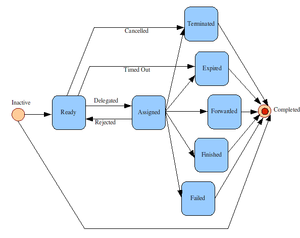
This image shows the life cycle of a task by u...
life cycle of a task

manage your time much more easily.  In that case, there are many different task management software programs out there that can help you manage your day.  So who would benefit most from task management, and the use of task management software?  Read on for more about this.

Many people find themselves at a certain point in their life looking for a task management software to help them refocus and keep their finger tips on what is important. Task management products organize, schedule and ensure that tasks get done on time. On short it can boost your productivity. By being better organized and more focused on what you have to do, you save time and reduce stress.

Good task and project management software was hard to find a few years ago when people were using Outlook. Nowadays productivity has become almost an obsession of geeks everywhere, so the increasing request for such tools generated a large base of good task and project management solutions. There are a lot of choices to help manage the tasks, ranging from standalone applications to web-based services.

What exactly are users looking for?

Most of them are actually looking for a personal organizer application to put some order in their busy and messy life. “In the beginning, I somehow managed to keep everything in my head. Then, as I began to take on more projects, I realized that I needed a task management system to keep me organized and focused.” says Deborah Woehr a freelance researcher and writer. These personal organizers generally take the form of the so called “To Do List” applications where users create a list of tasks for which they set a start date, some deadlines and a priority – something very simple.

The Getting Things Done (GTD) methodology

Most of the to-do-list applications these days adopt, to one degree or another, the GTD approach to task management according to the work-life management system by David Allen that provides concrete solutions for transforming overwhelm and uncertainty into an integrated system of stress free productivity. Apps vary as to how tightly or loosely bound to GTD they are. The problem, though, with To Do lists and personal organizers is that are only good for your work. Task management or task tracking software is more than just a to-do list. In a business many of the tasks are collaborative and require multiple team members to fulfill several tasks in a single project. In this case you need an application where assignments could be made, all tasks could be tracked, and completed work could be archived. This is a true task management tool. Users sometimes need to manage multiple projects and delegate work to resources, schedule tasks in time or even create plans. This is a further step to an upper level: project management or project planning software.

Why do we need a task management application?

Every day we spend most of the time on urgent but low priority tasks while the most important ones get delayed until another day. Unfortunately, that “another day” might never arrive. The famous Pareto principle of 80/20 rule applies here: 80% of most important work gets completed if you try to figure out the 20% of high priority tasks. Basically an effective task management software must give you the best way to find these top 20% of important tasks for a effective project management process. This is a major problem with task management applications: they require too much effort on users part. It is easy to spend too much time on organization, and not enough on getting things done. Too many apps spoil the productivity. Task management apps should flow, should make using them easier than writing things down on a piece of paper.

Benefits of a task management tool

  • helps you to organize, assign and prioritize tasks
  • allows you to establish goals and milestones and to manage deadlines
  • no need to remember all tasks and more productivity using reminders
  • entire work integration, effort delegation for increased efficiency and reduced costs
  • the break down of complex tasks into smaller deliverables that can be controlled with minor difficulty

A task management software is an essential component for organizational and business operations and can make managing the project simpler.

Enhanced by Zemanta
Posted in Task Management | Tagged , , | Leave a comment

Time Management Skills for Executives

Time management is essential for executives of companies because we all get 24 hours in

Microsoft Project 2000, showing a Gantt chart
Task management tool

a day, and the more responsibilities you have, the more you need to be able to accomplish in that same amount of time.  Creating good Time management skills is essential to being able to manage more and become more efficient.  Read on for more on the kinds of skills that executives need in their time management and task management to be successful.


What is the greatest time draining activity in which executives participate? Golfing? Tennis? Drinks with clients? Nope! It is the never ending stream of never limited meetings. Sometimes there are meetings to plan the next meeting. Meetings that are unorganized and unproductive are a complete waste of time.

The following are a few good time management skills for executives to help eliminate the stream of meetings and create an unstoppable productive workforce:

Trust — Hire people with a proven track record of getting things done and done well. Sure, if your buddy from high school is a powerhouse, hire him, but if your son-in-law can’t be trusted with a company credit card, don’t’ hire him.

Communicate — Create a method of communication that is clear, that is to the point, and that can be accomplished without a meeting such as a Wiki or project management system. Communicate through the message board on the wiki or project management system instead of in person and at meetings. This will avoid the general chit-chat that can happen during in person or telephone calls.

Responsibility — Create deadlines that are unambiguous, with time-sensitive tasks to be accomplished along the way and hold those responsible accountable. Rewarding time well spent is more important than punishing people who are late or underperform. Punishment and guilt only work when those you’ve hired care about their work and the company bottom line. So place your emphasis on the behavior you desire rather than spend time dealing with behaviors you don’t help your company bottom line.

Teamwork — Create an environment that values teamwork and mutual respect by allowing team members to work together without your oversight or permission. By encouraging team members to share valuable information openly about any project, you will create a strong team that will produce high-quality work.

Respect — If you have hired the right people for the job, let them do the job you hired them to do. Consider managing by exception than by micromanagement techniques. Micromanagement is another example of a time waster. It is fine during meetings and on the project management system to question each other about the why, what, who, and by when – but only when it is done with respect and for the purpose of bringing out the best in everyone. The best workforce effort will always improve the company bottom line.

Cooperation — Ask for help keeping meetings on track by agreeing to stick to a written and focused agenda before each meeting. Put the agenda on the project management system or Wiki for each member of the team to add to before the meeting. Do not allow last-minute additions during the meeting.

Remove barriers — Too often executives insulate themselves from the people most valuable to the company bottom line; the workforce. Obviously, you can’t have an open-door policy for everyone all the time, but you can do three things: create operational procedures that allow the workforce an opportunity to air complaints, contribute to the bottom line, and feel you care about them. You can show you care through rewards systems, high visibility at company gatherings, and regular visits to the production line. By putting in place the “care factor,” people will perform their best because they feel they are cared for, known, and heard.

As an executive, when you implement these kinds of time-saving strategies, you create an environment where everyone can be at their productive bests. Everyone will feel less stress because expectations are clear, a communication and calendaring system is in place, and the workforce will know there is a connection between you and them, beyond just the bottom line.

Award winning author, Debra J. Slover’s leadership expertise stems from 18 years directing a state youth services program, experience organizing 20 state and national conferences, and running her own consulting firm for over six years. Her website is http://www.leadershipgardenlegacy.com

Enhanced by Zemanta
Posted in Time Management | Tagged , , | Leave a comment

Pt 2 – Effective Time Management For Profitable Business Leadership Results in Strategic Innovative Actions

Pocket watch, savonette-type.

Image via Wikipedia

This is a continuation of the previous article on time management and leadership.

(Can This Moment Become) Quantity Time?

  1. Is it substantial? [is there substance, meaning or fulfillment in this use of my time?]
  2. Is it concrete? [producing a specific, tangible, measurable, realistic, attainable result from the use of my time]
  3. Is it clear? [does it help me be or become more focused, intentional, results-driven, practical]

Or you could use dimensionally-oriented questions to determine, implement and supervise your applications of business leadership significance. As we mentioned earlier, time can be measured against a location – that is, time and a location in space are always related – so we say, “you are always somewhere at some specific point of time!”

“Between stimulus and response there is a space. In that space is our power to choose our response. In our response lies our growth and our freedom.” – Viktor E. Frankl, psychologist

In the social expanse known as “space-time”, you’ll discover how dimensional constructions usually hold true. Social dimensions include the scope, importance, direction, magnitude, definition, quantity, aspect, extent, element, a position, attribute, property or proportion of any social activity.

Dimensional characteristics are important because they provide insights into the breadth, depth, thickness and heights of your utilization of time – are your capital assets being transformed into something tangibly significant, are your human players moving together in harmony, are the reasons for pursuing this action realizing the desired results?

Therefore, you will need to ask the following types of questions to generate the right types of dimensionally important answers and thus understand how well or how effectively you are using your time for performing your business or organizational leadership tasks:

  • Where-When: describes a physically obvious, tangible reality of an event without trying to explain any aspect of human, social or physical capital involvement or influences;
  • Who-What: defines and describes the moving parts, functional attributes and players of human exchanges, transactions, interactions or reactions
  • Why-How: endeavors to provide causes or reasons for human actions and seeks to identify the ways and means employed to satisfy or attain the desires for taking those actions

We can easily describe the process of how and when to take action to use the extant sources and depth of information, which are what you have, to help you become what you desire, to unleash the future envisioned by what your dreams have awakened within you, and prosecute your strategy for business leadership to the ultimate extent of your resources, expertise and abilities.

“Dream and give yourself permission to envision a You that you choose to be.” – Joy Page, actress

However, in essence, we must look at each and every one of our competitive, operational and developmental efforts as activities taking place within, and, as actions existing at points along, positions within or locations of “space-time” – that is, using these reference placements to indicate, investigate or interrogate the:

  1. Manifold – Which diverse, variety and many features of my actions…?
  2. Affect or Add-to the Dimensionality – the ins and outs, ups and downs, across and around, over and under, back and forth, breadth and length, brokenness and wholeness, heights and depths – of our efforts…?
  3. Time-frame – When will or When must the intervals, periods, moments, phases, ages, eons, ticks occur and…?
  4. Relativistic – How or How much does it relate to our past, present or future perspectives…?
  5. Who benefits or is impacted by the Attractions, Interactions, Transactions or Reactions of our informed actions – and Why will they be…?

Thus in the realm of social phenomena, we define “space-time” as the distinctive features and structural dimensions which identify the cognitive, cultural or emotive segments of perspectives and interactions involved when we act, acted or will take action.

“But the best teams I’ve encountered have one important thing in common: their team structure and processes cover a full range of distinct competencies necessary for success.” – Jesse James Garrett, Infopreneur, information architect

Therefore, business leadership means incorporating the “physics” of socially-oriented space-time into the creation and application of a much more effective time management program to generate profitable results and strategic innovative opportunities while it strengthens your organizational leadership development programs and performance improvement efforts.

Copyright 2010, Mustard Seed Investments Inc., All rights reserved worldwide.

Bill Thomas invites you to improve your leadership effectiveness, increase your professional excellence and energize your innovative talents at Leadership-Toolkit.Com – he strengthens you, your strategic expertise and the essential competencies needed by your executives, management professionals and entrepreneurs to lead-and-succeed in this global marketplace of the Imagination Age. Bill examines your business prospects, enriches your results and explores your most promising growth opportunities through his eBooks, eGuides, Videos & Audios, Software Tools and in-depth leadership skills training courses and executive development coaching programs. To maximize your leadership effectiveness and elevate your performances, pick-up your Free Leadership Power Energizers eGuide Today.

Enhanced by Zemanta
Posted in Time Management | Tagged , , , | Leave a comment

Pt 1 – Effective Time Management For Profitable Business Leadership Results in Strategic Innovative Actions

Pablo Picasso 1962

Image via Wikipedia

Effective leadership requires effective time management habits.  It is important to focus on the tasks that truly move projects and goals forward, instead of the tasks that don’t really make much of a difference.  This article talks about some of the time management practices and concepts that are needed for leaders to be effective at managing their teams.  Read on in this 2 part article for more!


A strategic way to boost your business leadership results, along with its profits, productivity and growth is through effective time management practices. Because time, as it is in any profession, is a critical resource in making business leadership actions profitable, innovative and transformative.

Before we continue, you need to appreciate this important fact about business leadership – whether we’re talking about market, innovative, strategic, situational, transformational, project or organizational leadership – leadership in any form is always a social activity.

So with that understanding, we can look at business leadership in three generic ways: as market leadership, organizational leadership and human capital leadership.

In business organizations, entrepreneurs may choose to invest their time in human capital related leadership activities, that is in leading, coaching or soliciting and recruiting the support of their associates and trading partners.

Entrepreneurial leaders also have opportunities to use their time to contribute to the quality, quantity or significance of life for their customers and clients. I call these actions a form of market leadership.

Business leadership tasks demand that leaders analyze, plan and re-order their budgets, cash flows, operational systems or their schedules, where their sole objective is to manage their time as profitably, effectively and creatively as possible. We can call these activities organizational leadership.

A fact-of-life for those professionals charged with business leadership responsibilities – which includes the executives, entrepreneurs and managers – they will usually encounter the most disruptions, interruptions or other forms of distractions to their scheduled activities. Unfortunately in the face of that reality, these business leadership personnel tend to immediately discount, ignore or underestimate the potential value in those unanticipated events.

If you ever hope to become an effective leader you should never focus your attention on the management of accomplishing tasks against a daily allotment of your time, you should however concentrate your energies on the management or maximizing the allocations of your significance.

We know that being effective means doing the right things. We also know that being efficient is doing things the right way. Are you doing the “right things” or are you doing things “the right way”?

The problem with the focus of most time management strategies is this, we are told to be efficient in our use of time, that is, we’re taught that the right way of doing time management is to plot whichever tasks we feel or believe we need to accomplish in a certain amount of time segments.

And in the case of business leadership, the right things for your usage of time must be based upon your contributions of quality, quantity or the value of your significance.

In a word, your contributions have to be acts that you take for the purpose of being of benefit to all the actors, artifacts or artifices, attributes and audiences engaged in your social activity. On the other hand, your significance must add a form of excellence, emphasis, essence, elevation, eminence, effectiveness, efficacy, efficiency, execution, elucidation, explanation, exposition, expression or esteem to your actions.

“Most executives, many scientists, and almost all business school graduates believe that if you analyze data, this will give you new ideas. Unfortunately, this belief is totally wrong. The mind can only see what it is prepared to see.” – Edward de Bono, creativity expert

I advise my business leadership clients to keep strategic questions in mind whenever they engage in any activity. I call these mini-evaluations strategic because being strategic means being decisive, deliberate and dexterous – meaning leaders who wish to be strategic thinkers or questioners have to think through, think about and think with their actions, don’t they?

The purpose of those questions isn’t to generate answers consisting of one-word or a single idea. And leaders shouldn’t use these questions to judge a moment-in-time as being either significant or worthless. Rather than making those types of value judgments, these questions should ensure you have competent, strategic responses prepared, organized and ready to go in advance, so that you can optimize, leverage or otherwise make the best use of those planned-for or unplanned-for periods of time.

Here is one set of example questions you could ask to help you make more effective use of your time, regardless of any interruption, or unexpected or distracting event.

“Never permit a dichotomy to rule your life, a dichotomy in which you hate what you do so you can have pleasure in your spare time. Look for a situation in which your work will give you as much happiness as your spare time.” – Pablo Picasso, artist

(Can I Make This) Quality Time?

  • Is it pure? [resulting in no distractions, disruptions, delays from your goals or mission]
  • Is it sweet? [warm, refreshing and enjoyable experience or environment or forum or venue]
  • Is it absolute? [secure, or obligated to my relationship, or persuasive or memorable]

“We need to internalize this idea of excellence. Not many folks spend a lot of time trying to be excellent.”
- USA President Barack Obama

Continued in Part 2.

Enhanced by Zemanta
Posted in Time Management | Tagged , , , , | Leave a comment